
Bill C-12 Is Now Law: What Refugee Claimants in Canada Need to Understand
Bill C-12 introduces new refugee claim rules in Canada. Learn how the 1-year rule, 14-day rule, and IRB eligibility changes affect claimants.
IMMIGRATION TIPS & STEP-BY-STEP GUIDES
Mehdi Nafisi
3/30/20263 min read
Bill C-12 Is Now Law: What Refugee Claimants in Canada Need to UnderstandBill C-12 is now law in
Canada, and new asylum eligibility rules are already in effect.
These changes affect whether some refugee claims will be referred to the Immigration and Refugee Board of Canada, or IRB. In certain situations, a claim may no longer go through the regular refugee determination process and may instead be redirected to a different protection pathway.
If you are considering a refugee claim, have already made one, or delayed making one, timing and entry history now matter more than before.
Official Government of Canada update:
https://www.canada.ca/en/immigration-refugees-citizenship/news/2026/03/new-immigration-and-asylum-measures-from-bill-c-12-the-strengthening-canadas-immigration-system-and-borders-act-have-become-law.html
Quick overview
Bill C-12 does not eliminate refugee protection in Canada. It introduces new rules that can prevent some claims from being referred to the IRB.
According to the Government of Canada, these rules apply to claims made on or after June 3, 2025. A claim may not be referred to the IRB if:
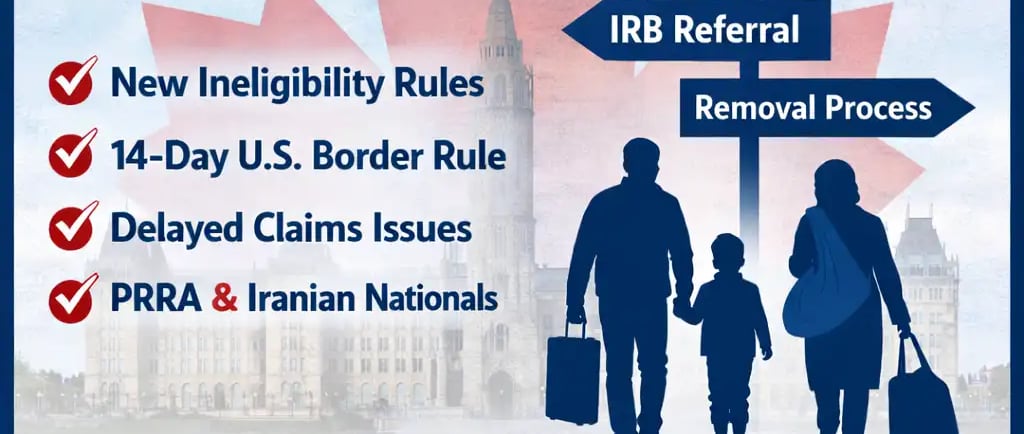
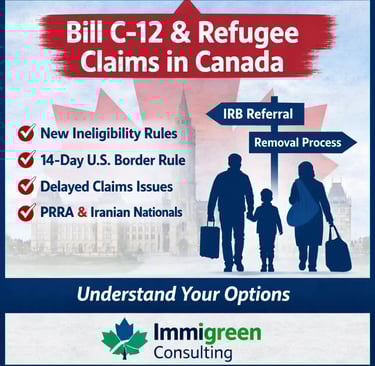
it is made more than one year after the person’s first entry into Canada after June 24, 2020
it is made more than 14 days after an irregular entry between ports of entry at the Canada–United States land border
The government also indicates that affected individuals may still have access to a Pre-Removal Risk Assessment, or PRRA, and that the Safe Third Country Agreement continues to operate separately.
What changed in practical terms
For many people, the change is procedural, not just substantive.
delayed claims may now be blocked from IRB referral
leaving and re-entering Canada does not reset the timing
irregular entry cases now involve a 14-day constraint
some cases may be redirected to PRRA instead of a full IRB hearing
The key question is no longer only whether a claim is strong. It is whether the claim will still be referred to the IRB at all.
The one-year rule
One of the most significant changes is the one-year timing rule.
The Government of Canada states that a claim made more than one year after a person’s first entry into Canada after June 24, 2020, will not be referred to the IRB, even if that person later left Canada and returned.
A delayed claim may still be genuine. However, under Bill C-12, delay can now affect access to the IRB process itself, not just how the case is assessed later.
The 14-day rule for irregular entry
The Government of Canada also states that claims made by individuals who entered Canada between ports of entry along the Canada–United States land border will not be referred to the IRB if the claim is made more than 14 days after entry.
This rule is separate from the Safe Third Country Agreement.
The Safe Third Country Agreement continues to apply at ports of entry and in certain other situations. Bill C-12 introduces an additional rule that applies based on timing after irregular entry, not on the same legal basis.
If a claim is not referred to the IRB
If one of these eligibility rules applies, the claim may not proceed to the IRB.
Instead, the Government of Canada indicates that affected individuals may still have access to a Pre-Removal Risk Assessment, or PRRA, which assesses risk before removal.
PRRA is not the same as a full refugee hearing before the IRB, and it operates under a different process and decision framework.
For a more detailed and structured breakdown of how these rules affect IRB access and PRRA, see our full guide here:
https://immigreen.com/bill-c12-refugee-claims-canada
Who should pay attention
These changes are especially important for:
individuals who entered Canada earlier but delayed making a refugee claim
individuals who crossed from the United States outside a port of entry
people trying to understand whether a prior entry or delay may now affect eligibility
families who assumed they could decide later when to start the refugee process
Practical takeaway
Bill C-12 places much greater weight on timing.
In some cases, once an eligibility bar applies, it cannot be reversed by simply filing a claim later.
If your situation involves delayed claim timing, prior entries to Canada, or movement across the United States border, the eligibility question should be reviewed carefully before any steps are taken.
If your situation may be affected by these changes, we can review your claim history, timing, and available options before any steps are taken.
Contact us
If you’re facing challenges with your case or just want to get it right the first time, reach out today. We’re here to help.
Every story is unique
© 2025. All rights reserved.
Strategic. Human. Results-driven. Complete Canadian immigration services for visas, PR, and complex cases. We go beyond paperwork.
Menu


Legal Notices
Resources